 Allegheny County, PA (where we are based) just passed the first county-level paid parental leave mandate in America. As a small business owner sitting just below the 15-employee line this law draws, it didn't land as an abstract policy debate for me. It landed as a decision I now have to make about whether my company gets to grow.
Let me start with what actually passed, because the details matter more than the headlines. On October 20, County Council voted 11–4 to approve a Paid Parental Leave regulation. Once signed by the County Executive, covered employers will have up to 12 months to implement it. In plain terms: if you employ 15 or more people who work in the county, you will have to give eligible new parents up to 12 weeks off at full pay — and unlike states that fund paid leave through a shared payroll-tax insurance pool, here the money comes out of the employer's pocket. The core terms: • Up to 12 weeks of paid parental leave for a birth, adoption, or placement — stillbirth included • 100% of the employee's wages, capped at $4,200 per week • Applies to employers with 15 or more employees; businesses under 15 are exempt • Employees qualify after 6 months on the job; part-timers must also log 625 hours • Temporary and seasonal employees are not eligible • The employer pays — either self-funded or through private insurance the county estimates at roughly $13–$30 per employee, per month I want to be clear about something up front: the goal here is a good one. Allegheny County has some of the worst maternal and infant mortality numbers in Pennsylvania, and nobody who has held a newborn thinks a parent should have to choose between a paycheck and those first weeks. Several members of my own crew are parents. I get it. But a mandate is not a wish. It's a cost structure, and somebody has to absorb it. So let's talk honestly about where it lands. THE MATH THAT ISN'T IN THE PRESS RELEASE The insurance estimate — $13 to $30 per employee per month — sounds painless. Multiply it by every employee on your roster, every month, whether anyone takes leave or not. For a 20-person company, that's roughly $3,000 to $7,000 a year in new fixed cost before a single baby is born. And the premium is the small part. When an employee takes 12 weeks, the work doesn't take 12 weeks off. You either pay twice — the person on leave and the person covering for them — or you run short-handed for a quarter of a year. In my industry, events don't reschedule because someone is on leave. The show happens on the date it happens. THE EMPLOYMENT EFFECTS NOBODY IS MODELING I'll give you a real example instead of a theory: mine. Pierce Events runs a small crew — currently just under the 15-employee line. We're busy — this fall has us running events across multiple states, sometimes two, three, even four in a single day — and I was planning to hire. There is more work on the table than my current crew can comfortably cover. We could go to 15 or 16 employees right now. But look at the math the regulation hands me. The hire just below that line costs me a wage. The hire that reaches it costs me a wage plus the entire mandate — leave premiums or self-funded exposure for every eligible employee on the roster, the coverage problem every time someone is out, and the administrative load that comes with all of it — switched on, in full, the day that fifteenth person starts. So the decision the regulation pushes me toward is to stop hiring just short of the line. Not because the work isn't there. Not because I don't want to grow — growth is the whole point. Because the county drew its line at 15, and crossing it changes my cost structure overnight. Let me be very clear about what that means: those are jobs this county says it wants, at a company that is ready to create them, that now will not exist. And I'm not an edge case. Every employer in Allegheny County sitting just below that line is running this same calculation this week. The job losses from this law will never appear in a headline — they'll appear as job postings that were never written. The other margin is just as predictable. Employers who can will lean harder on seasonal, temporary, and contract labor — the categories this regulation excludes. So the policy may quietly push more work into the arrangements that offer workers the least security and no path to benefits like this one at all. That is the opposite of the intent, and it's the most direct consequence of the design. And county employers now carry a cost that competitors 30 minutes away in Butler, Washington, or Westmoreland County do not. In a region where businesses compete across county lines for the same clients, that difference is real. THE PART A LOT OF OWNERS ARE GETTING WRONG I've already heard owners say they'll just move the business out of Allegheny County. That doesn't work. This regulation follows the work, not the office address. It applies to employees who work 80 or more hours a year inside Allegheny County — including remote workers, and including companies headquartered in other states whose people work here. If your team works in this county, relocating your mailing address to Cranberry or Canonsburg doesn't get you out from under it. Plan accordingly. A WORD ABOUT THE 9-TO-5 I recently read a piece built around a worker's frustration with the standard grind: up at the same time every day, work nine to five, and your life is what's left on the weekends. I don't doubt that frustration is real. But I read it knowing this Friday puts me on site at 6 AM for the first of four events in a single day — the first setup in near-freezing weather, the last one wrapping up close to 11 PM. That's a "day off" on neither end of it. That's not a complaint. I chose this. But it is the part of the ledger that never appears in these policy debates: the business owner has no mandated leave. There is no regulation that pays me 100% of anything when I step away, no insurance product that covers the business when the owner is the one holding the newborn at 3 AM and a client call at 7. When an employee takes 12 weeks, the owner's hours don't shrink to absorb the gap — they grow. The risk in every one of these policies flows downhill to the person whose name is on the lease, the loans, and the payroll account. That doesn't make the policy wrong. It makes it incomplete when we pretend the cost is free. WHERE I LAND Supporting new parents and respecting what it costs to employ people are not opposing positions. I hold both. The county clearly listened during the comment process — the original proposal was 18 weeks for every employer with no wage cap, and what passed is meaningfully more workable than what was introduced. Credit where it's due. But "more workable than the original" is not the same as "without consequence." And the first consequence isn't hypothetical or a year away — it's already happened, in my own company, in the form of a hiring plan put on hold just short of the line. Internship to employment programs will end this year. Over the next 12 months, as this gets implemented, I'll be watching the same things every owner I know will be watching: what the insurance actually costs when companies go to buy it, whether hiring at the 15-employee line slows down, and whether covered employers start structuring work around the mandate instead of around the job. If you're an Allegheny County employer, now is the time to understand whether you're covered and what this means for your payroll — not the month before the deadline. If you're a business owner dealing with this, I'm genuinely interested in how you're approaching it. And if you're an employee who will benefit from it — congratulations. Use every week of it. Those weeks don't come back, , but neither do jobs or companies that end. #SmallBusiness #Pittsburgh #AlleghenyCounty #PaidLeave #BusinessOwner #EventIndustry #PublicPolicy
0 Comments
 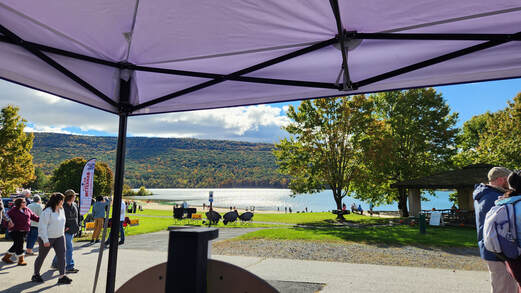 Saturday was one for the books. Pierce Events ran two fall festivals on the same day — at opposite ends of central Pennsylvania — and both crews delivered. 🎃 Punkin' Chunkin' Fall Festival — Bald Eagle State Park, Howard, PAThis one's a Pennsylvania institution. Running since 2011 as a fundraiser for the Howard Volunteer Fire Company, it's exactly what it sounds like: teams build air cannons, trebuchets, and catapults and launch pumpkins hundreds of feet through the air, splashing down in Sayers Lake. Add nearly 100 craft vendors, hayrides, a pumpkin pie eating contest, live music, and a fire apparatus display — all with free admission and free parking — and you've got one of the best fall days in the state. (Don't take our word for it: it's been featured in regional "best fall festivals" roundups and Penn State's own fall fun guide.) Colleen and Morgan ran our site from gates-open to teardown, 10 AM to 5 PM. 🍂 Mount Carmel Fall Fest — South Oak Street, Mount Carmel, PAMeanwhile, 90+ vendors, crafts, and community fun packed downtown Mount Carmel from 10 AM to 4 PM. I ran this one solo — small-town fall festival energy at its best. Two sites. Two crews. One day.That's what we do: show up, run the show, and make it look easy. Whether it's a downtown street festival or a full day at the state park, we've got the crew and the gear to cover it — even two at once. Planning a fall festival, grand opening, or community event? Let's talk. — Pierce Events | Pittsburgh, PA | 724-986-6939   What a weekend it was! President Donald Trump’s vision for a monumental UFC event on the White House South Lawn came to life in spectacular fashion, delivering an unforgettable blend of world-class mixed martial arts, patriotism, and pure American energy as part of the nation’s 250th anniversary celebrations. The highlight of the weekend — seven thrilling MMA matches held right on the South Lawn — capped off days of excitement. An impressive temporary arena seating 4,000 lucky spectators hosted the action inside the iconic Octagon, while another 120,000 enthusiastic fans, selected through a popular online lottery, gathered on the nearby Ellipse to cheer on the fighters and soak in the historic atmosphere. Bringing this massive production to life required an extraordinary coordinated effort. More than seven federal agencies, including the Department of Homeland Security and the Federal Aviation Administration, worked seamlessly alongside hundreds of dedicated staff. The Secret Service efficiently screened between 20 and 30 trucks of equipment and 700 to 900 personnel daily during the build-out, which began on May 20. According to court filings that offered a rare behind-the-scenes look, the UFC and its affiliated partners invested well over $60 million and tens of thousands of labor hours to make the event possible — a true testament to private-sector commitment and public-private partnership at its finest. Despite a last-minute legal challenge from two Virginia residents, the National Park Service and involved agencies moved forward confidently, ensuring the show went on without a hitch. The result? A resounding success that showcased American ingenuity, resilience, and the enduring spirit of competition. From the roar of the crowd to the electric atmosphere on the South Lawn, the event perfectly captured the bold, forward-looking celebration America deserves on its 250th birthday. Fighters displayed incredible skill and heart, fans created memories that will last a lifetime, and the entire production stood as a powerful symbol of national pride. Moments like these remind us why America continues to lead — not just in strength and spectacle, but in bringing people together for shared experiences that transcend politics and celebrate what unites us. Here’s to many more landmark events that honor our past and build an even brighter future. What did you think of the fights? Drop your favorite moment in the comments below!   Many event professionals are off track. After years in the industry, I made a deliberate choice to step away from the event bubble. You know the one—where we all follow the same speakers, attend the same conferences, scroll the same trend reports, and chase the same flashy productions. Instead, I focused my attention where it actually matters: on the clients and guests themselves. What do they need? What are they experiencing? What do they remember months later? What I discovered was eye-opening. Much of what we in the events world consider "standard" or even tired is completely fresh and impactful to those outside our industry. Not every gathering needs to be a high-production conference with multiple stages, AV wizardry, and a roster of celebrity speakers. In many cases, the most effective events are the ones that feel more human—conversations over cocktails, intimate roundtables, or structured networking that actually leads to real dialogue. The hidden cost of "efficiency" Think about the last time you attended an event where you were funneled through a rapid check-in process—scanning 1,000 barcodes, digital tickets flashing on phones, staff glued to tablets. Operationally smooth? Yes. But what’s lost in that process?
In our relentless pursuit of efficiency and scale, we’re often sacrificing the very connection points that make events powerful in the first place. I recently produced a corporate event for a group of management-level professionals. The production plan was tight, the talking points were crafted, and the run of show looked perfect on paper. There was just one problem: the team itself wasn’t comfortable with face-to-face interaction. They were highly proficient in Slack, email, and group chats—but actual in-person conversation felt foreign. This gap didn’t just affect how they engaged with each other. It impacted their interactions with invited guests. It made me realize something uncomfortable: as event professionals, we may inadvertently be contributing to the erosion of genuine human connection rather than fixing it. The "us vs. them" trap Too often we default to putting people on stage while the audience sits in the dark—the classic speaker-audience divide. While this format has its place, it shouldn’t be the default. What if we designed more events that created meaningful, direct conversation opportunities? What if we measured success less by production value and more by the quality of relationships formed and outcomes achieved? I’ve come to believe we sometimes plan events to impress ourselves and our peers more than the people who actually matter—the clients and attendees. That mistake can be fatal to both the event’s success and our industry’s relevance. A better approach Here’s what I recommend:
The events industry has incredible potential to create meaningful human experiences in a world that’s increasingly digital and disconnected. But we’ll only fulfill that potential if we stay grounded in reality—focused on people, not production for production’s sake. What are your thoughts? Have you attended or produced an event recently where simplicity and connection outperformed big production value? Or have you seen the opposite—where flash got in the way of results? I’d love to hear your experiences. #EventPlanning #CorporateEvents #EventStrategy #Leadership #Networking  In just over a week, our home city will step into the national (and international) spotlight as host of the 2026 NFL Draft, taking place April 23–25.
What started nearly a century ago as a low-key gathering in a hotel ballroom has exploded into one of the biggest events in sports. This year, the Draft is turning the North Shore, Point State Park, and areas around Acrisure Stadium into a massive football festival and one of the largest events to ever be hosted by the city. Back in the 1930s, the Draft was a quiet, behind-closed-doors affair with almost no media. Fast-forward to today, and it’s a full-blown multi-day production drawing more than 1,800 reporters and photographers to Pittsburgh. It's TV production, live streaming, concert production, VIP management, lighting, staging, security, logistic, government affairs, licensing, coordination, construction, food and beverage, emergency management and more. The NFL is pulling out all the stops to make this an unforgettable experience — both for the prospects stepping into the league and for the fans and visitors flooding our streets. According to NFL executives, the growth has been exponential. In 2006, about 655 media members covered the event in New York. This year in Pittsburgh? Expect well over 1,800 on-site, plus countless more following every pick, trade rumor, and skyline shot from home. The league is especially excited to “turn the camera around” and showcase what makes Pittsburgh special. The main stage design even nods to our industrial heritage with open-truss elements that echo the steelwork and bridges that define our city. Behind the scenes, it’s a massive operation. Hundreds of NFL staff, local crews, vendors, and city partners have been working for since Pittsburgh was chosen. From CAD renderings and site logistics to traffic plans, public safety coordination, and family experiences for the draftees — every detail is meticulously orchestrated. For Pittsburgh, this is more than just a football event — it’s a global stage to tell our story. The NFL, VisitPittsburgh, the City, Allegheny County, and local event partners are working together to highlight our landmarks, culture, and unmistakable grit. Whether you’re a lifelong Steelers fan, a college football fan, or just someone who loves big-city energy, the experience will be incredible. Being deeply involved in the Pittsburgh events scene, we can’t wait to see this production comes together. The energy, the logistics, the collaboration between the NFL, local government, and community partners — it’s a masterclass in event execution on the biggest scale. If you’re planning to be part of the action, whether downtown, on the North Shore, or watching from home, get ready. Pittsburgh is about to show the world why we’re the City of Champions.   At Pierce Events, we're all about creating unforgettable experiences that blend creativity, precision, and a touch of magic. The above stadium layout may not look like much, but it's the map to Bad Bunny's Apple Music Super Bowl LX Halftime Show at Levi's Stadium in Santa Clara, California. Imagine this: an entire high-energy performance – complete with intricate sets, pyrotechnics, and cultural tributes – built, executed, and dismantled in under 30 minutes, all while over 100 million viewers watched worldwide. It's the kind of logistical feat that keeps event planners like us up at night, dreaming of how to pull it off. What makes this even more mind-boggling? It's not just a concert; it's a globally broadcast spectacle on the NFL's sacred turf, where every detail is engineered to perfection without leaving a single blade of grass out of place. Let's dive deeper into the planning, production, and sheer ingenuity that made Bad Bunny's show a masterclass in event execution. The Months-Long Master Plan: From Concept to Field-Ready Halftime shows like this don't happen overnight. Planning kicks off months in advance – often up to a year – involving a symphony of creative minds, engineers, and producers. For Bad Bunny's performance, the creative direction came from a powerhouse team led by Bruce Rodgers of Tribe Inc., marking his 20th Super Bowl halftime design. Collaborating closely with Bad Bunny's own crew, including production manager Roly Garba and creative director Harriet Cuddeford, they transformed the artist's vision of celebrating Puerto Rican roots into a tangible set. The design phase focused on cultural symbolism: a casita (traditional Puerto Rican house), a vintage truck, and a wedding stage, all infused with reggaeton, salsa, and Latin rhythms. Yellow Studio, a New York and London-based production design firm, handled much of the set creation, working with art directors like Connor Munion and Oli Coleman to ensure every element nodded to Bad Bunny's heritage – from sugarcane fields to vibrant community vibes. This wasn't just aesthetics; it was storytelling on steroids. Engineering was crucial too. The NFL is notoriously protective of its fields, so the team calculated every pound of staging to avoid damage. Innovative solutions included dressing nearly 400 costumed extras as "plants" to blend into the set while protecting the turf – a clever hack that allowed for dynamic movement without heavy footprints. Rehearsals? Intense and iterative, held off-site to simulate the high-stakes environment, with choreography fine-tuned by experts like Aakomon Jones for seamless flow. Production Powerhouse: Building the BeastThe stage itself? A marvel of modular design. Pre-built rolling carts – think oversized, interlocking Lego blocks – were fabricated by companies like All Access Staging and ShowFX. Each cart came pre-rigged with lighting, audio wiring, and even pyrotechnics (a whopping 9,852 of them for colored smoke and fireworks). Lighting design by Al Gurdon and Ben Green, delivered through PRG and 22 Degrees, adapted to the partial daylight at Levi's Stadium, using programmable fixtures for dramatic effects. Logistics involved semi-trucks hauling gear, with sets spanning over 118 linear feet across 20+ custom carts. Fabrication partners like Lennon & Co., Global Scenic, and Atomic Scenery ensured durability, while CAD designers like Brian Ireland mapped out every connection. The 7-Minute Miracle: Assembly, Performance, and StrikeWhen halftime hits, it's go time. Hundreds of crew members – over 200 in some cases – sprint onto the field in a choreographed frenzy. They have just 6-8 minutes to assemble the entire setup: locking carts, connecting power, and testing systems. It's like building a pop-up concert venue on a football field, all while avoiding any dents to the grass. Bad Bunny's 13-minute set was a cultural explosion, with him in an all-white outfit emblazoned with "64" (a nod to Puerto Rico's area code), dancing amid the sets and extras. Then, another 6-8 minutes to strike it all – disassembling, rolling away, and vanishing before the second half kicks off. Bad Bunny's show not only set social media records with 4 billion views in 24 hours but also reminded us that great events are about more than entertainment – they're about cultural impact and flawless execution. If you're planning your own show for your company or product, hit us up at Pierce Events. Let's make your vision epic. Stay tuned for more behind-the-scenes insights from the world of events! – The Pierce Events Team  |
AuthorEventspark is published by Pierce Events - Pittsburgh, PA 15202 Comments and Submissions are welcome You can reach us at [email protected] or visit our website www.pierceevents.net 1-724-986-6939 Archives
October 2026
Categories
All
|
 RSS Feed